At EduCare Specialist Services, we believe mental health education should be accessible to everyone, no matter where they live. Our commitment to global wellbeing extends beyond Australia. Therefore, we are proud to celebrate the humanitarian work of our psychologist Maria Andreoli, who volunteered her time and expertise to deliver Vanuatu mental health education and counselling in schools and community settings.
Vanuatu: Why mental health education matters
Vanuatu is a Melanesian archipelago in the South Pacific with around 83 islands2. About 63 islands are permanently inhabited2. As a result, health service delivery faces significant challenges. Reaching outer islands is especially difficult.
The country has three official languages: Bislama, English, and French1. This diversity enriches culture but also makes health communication complex. Since independence in 1980, Vanuatu has worked to strengthen health systems. However, mental health remains an area of significant need.
Over the past decade, Vanuatu introduced two major mental health strategies. The Mental Health Policy and Strategic Plan 2016–2020 focused on promotion, prevention, and early detection3. In addition, the updated 2021–2030 plan emphasizes human rights, accessibility, community participation, and cultural sensitivity4. These strategies support school-based wellbeing spaces, teacher training, and referral networks4. Consequently, they align perfectly with community-led mental health education.
Resilience and recovery: Schools as anchors
Vanuatu is highly vulnerable to natural disasters. For example, in December 2024, a magnitude 7.3 earthquake near Port Vila caused widespread damage. UNICEF reported 80,000 people affected and 40,000 children needing assistance9. Education and psychosocial support became urgent priorities.
In early 2025, UNICEF and partners helped the Ministry of Education set up more than 50 Temporary Learning Spaces. These spaces enabled 5,839 children to continue learning5. Furthermore, they became entry points for mental health and psychosocial support (MHPSS). Teachers and frontline workers were trained to help children express feelings and access referrals6. In addition, the European Union and UNICEF announced a partnership to strengthen climate resilience in schools7. As a result, schools now act as community anchors. Integrating MHPSS into education supports recovery and long-term resilience5, 6 & 7.
Maria’s mission of compassion and education
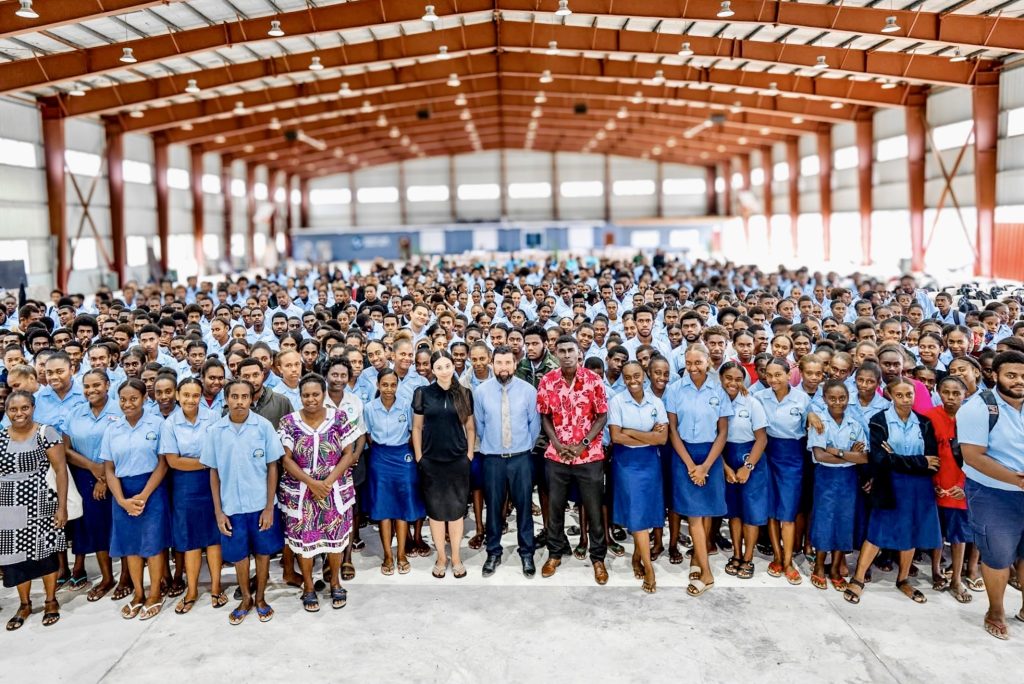
Travelling with Amazing Facts Oceania, Maria focused on school-based mental health education during the day and community counselling at night. A large white counselling tent at a local high school provided safe, private one-to-one support. Her school hall sessions reached approximately 800 students. These sessions introduced skills in emotional wellbeing, coping strategies, and safe relationships. Importantly, these priorities align with Vanuatu’s national mental health strategies4.
In Maria’s own words
For example, Maria explains:
During my trip to Vanuatu, I travelled with Amazing Facts Oceania, a Christian organization that also sent a medical team of doctors, nurses, and dentists, as well as speakers for community events. My husband was one of the speakers, and I focused on mental health education and support at a local high school by day, and a community site by night. To provide a safe and private space for students, a large white tent was set up at the school where I offered one-on-one counselling and lifestyle support.
Mental health awareness is very limited in Vanuatu, so I provided education to around 800 students in the school hall, covering emotional wellbeing, basic mental health coping strategies, and safe relationships. Many had never heard mental health discussed before. In the counselling tents, students and community members shared challenges including self-harm, panic attacks, substance use, family violence and stress from financial pressures. Many disclosed they had never had a space where they could discuss these issues. It was rewarding to see their openness, engagement, and willingness to reflect on their own wellbeing.
I also had the privilege to visit the only mental health service on the Island that dealt with domestic violence. I was able to train their team of counsellors in supporting children with trauma and later I raised community awareness of this service. During my community night talks I was approached by and counselled various women in dangerous domestic violence situation and was able to refer to this service.
The trip led to positive outcomes in the community and school. In the community, many women learned that physical violence is never okay and help seeking is encouraged. In the school, the leadership decided to take a more active approach to mental health, and they set up a new permanent space for students to discuss challenges and access support. I also recommended that the school provide teacher training on mental health in schools and seek funding for a dedicated support person, such as a chaplain or counsellor, to assist with students’ mental health long term (psychologists are simply not accessible). I hope that the report I wrote for them will increase their chances of accessing funding. The combination of education, counselling, and these plans helps support students’ wellbeing and builds the foundation for ongoing mental health care at the school and in the community of Vanuatu.”
— Maria Andreoli

Community needs and evidence from the Pacific
The issues Maria encountered include self-harm, panic attacks, substance use, domestic and family violence, and economic stress. Research on Pacific student wellbeing shows clear signs of psychological distress and significant concealment of personal distress. Therefore, experts recommend normalizing discussion of mental health and building culturally informed support in schools8. These findings mirror Vanuatu’s mental health plan, which prioritizes human rights, access, and community engagement4.
Sustainable impact and long-term change
A lasting outcome of Maria’s visit was the creation of a permanent student wellbeing space at the school. She also recommended teacher training and funding for a dedicated support role such as a chaplain or counsellor. These steps align with international best practice to embed MHPSS into education. Consequently, this is especially important in disaster-prone contexts where schools act as trusted hubs for wellbeing and early help5, 6 & 7.
Learn more about Maria
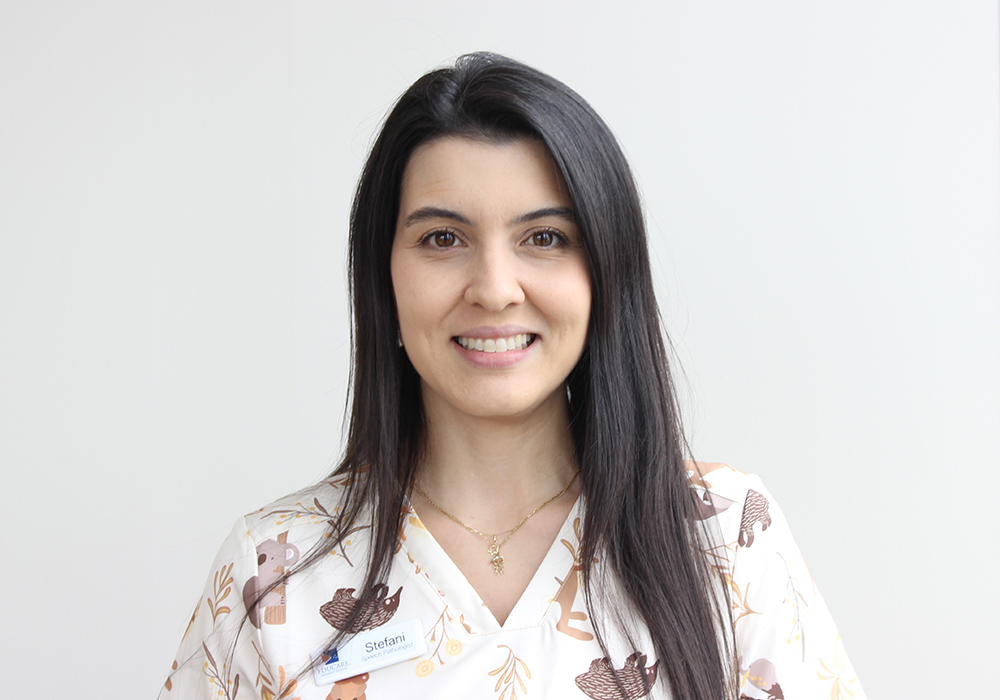
Maria Andreoli is a Psychologist with EduCare Specialist Services in Charlestown NSW, with telehealth availability.
- About Maria on EduCare: https://educare.net.au/about/maria-andreoli/
References
[1] Languages of Vanuatu. Wikipedia. https://en.wikipedia.org/wiki/Languages_of_Vanuatu
[2] Vanuatu 2020 Census Analytical Report Vol. 2. Statistics for Development Division, Pacific Community. Notes 83 islands with about 63 permanently inhabited. https://sdd.spc.int/news/2023/04/03/vanuatu-2020-census-analytical-report-vol2
[3] Vanuatu Mental Health Policy and Strategic Plan 2016 to 2020. Ministry of Health, Government of Vanuatu. https://moh.gov.vu/images/health_policies/policies/Vanuatu_Mental_Health_Policy_and_Strategic_Plan_2016_-2020.pdf
[4] Vanuatu Mental Health Policy & Strategic Plan 2021 to 2030. Ministry of Health, Government of Vanuatu. https://moh.gov.vu/images/Strategic_Plan/MH%20Policy%20and%20Strategic%20Plan%202021-2030%20for%20printing-converted.pdf
[5] ReliefWeb. The earthquake will not stop children learning, UNICEF supports Vanuatu’s recovery plan. Posted 16 Feb 2025. https://reliefweb.int/report/vanuatu/earthquake-wont-stop-children-learning-unicef-supports-vanuatus-recovery-plan-thousands-children-start-new-school-year
[6] UNICEF Pacific press release. The earthquake will not stop children learning, 17 Feb 2025. https://www.unicef.org/pacificislands/press-releases/earthquake-wont-stop-children-learning
[7] European Union and UNICEF joint press. Vanuatu’s schools to transform into safe havens. https://www.eeas.europa.eu/sites/default/files/documents/2025/UNICEF_EU%20Sheltering%20Schools_Vanuatu.pdf
[8] Journal of Pacific Studies. Student Health and Well‑being in the Pacific, University of the South Pacific. https://www.usp.ac.fj/journal-of-pacific-studies/all-issues/volume-41-issue-1-2021/student-health-and-well-being-in-the-pacific-findings-from-a-diverse-regional-population/
[9] UNICEF Situation Report No. 2. Vanuatu Earthquake, 18 Dec 2024. https://reliefweb.int/report/vanuatu/unicef-vanuatu-humanitarian-situation-report-no-2-earthquake-18-december-2024
[10] UNICEF USA. Support Children in Vanuatu, context and December 2024 earthquake summary. https://www.unicefusa.org/where-unicef-works/asia/vanuatu